

Claude Shepperson and His Work: The Art of the Illustrator (Limited Edition Prints)
Claude Shepperson and His Work: The Art of the Illustrator (Limited Edition Prints)
Artist: Claude Shepperson
Medium: Limited edition Lithograph prints on Card
Size: 11" x 16" (279mm x 406mm)
Date: 1918
Code: Shepperson6
This is a Limited edition collection of prints.
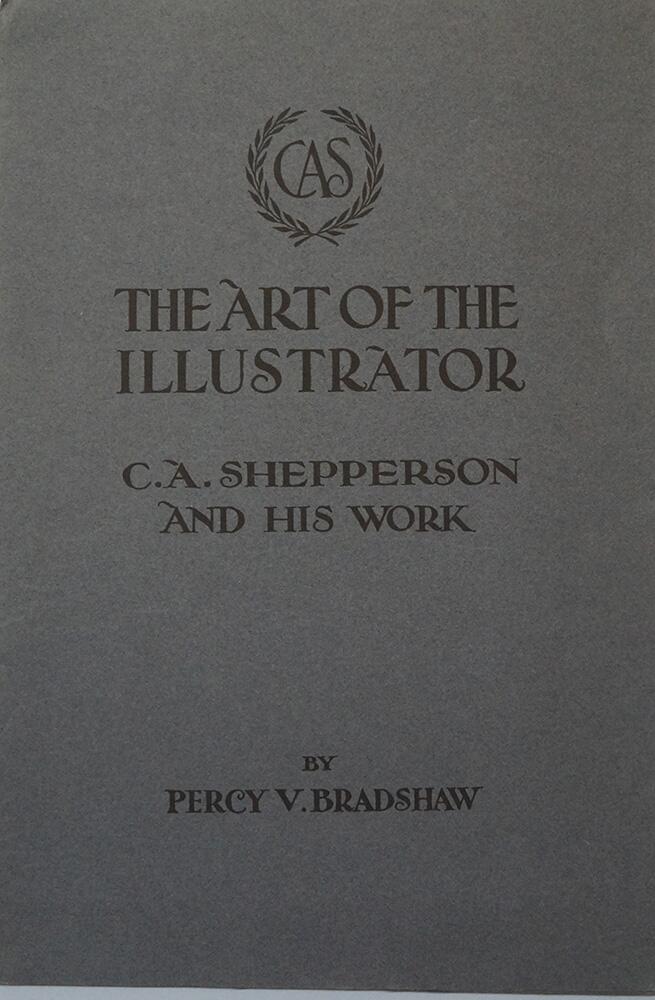
The Art of The Illustrator by Percy V Bradshaw was published in 1918 by The Press Art School, Forest Hill, London. In 1918 Percy Bradshaw contacted 20 of the leading illustrators of the day and commissioned each of them for a special illustration.
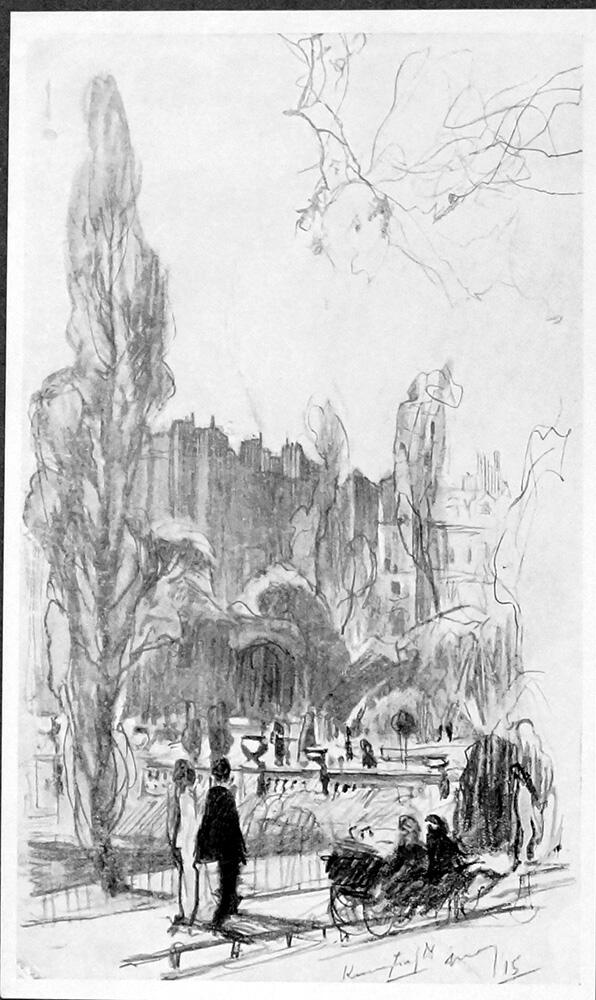
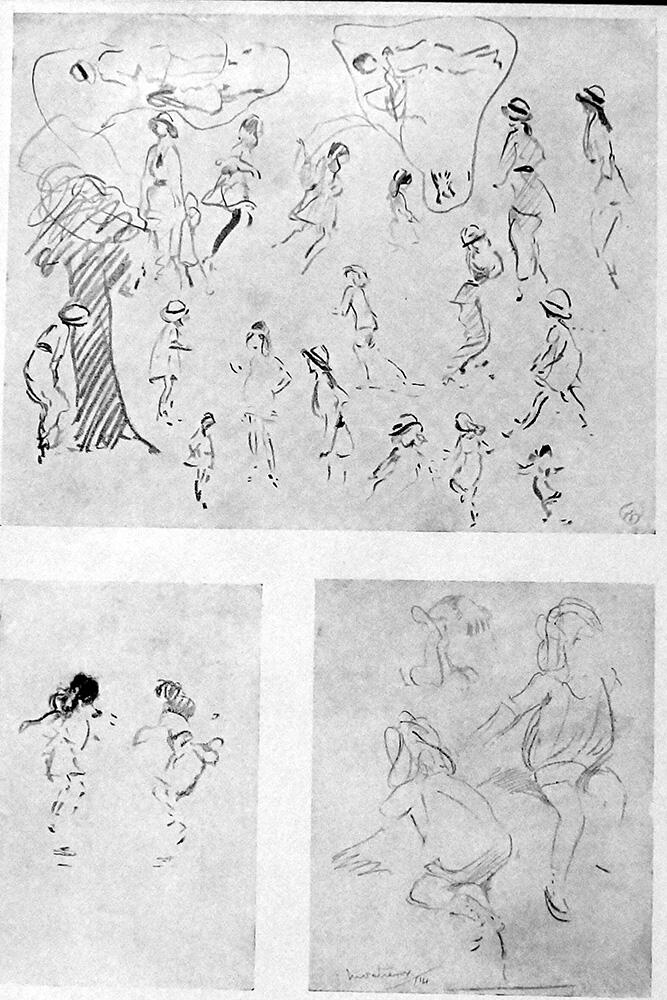
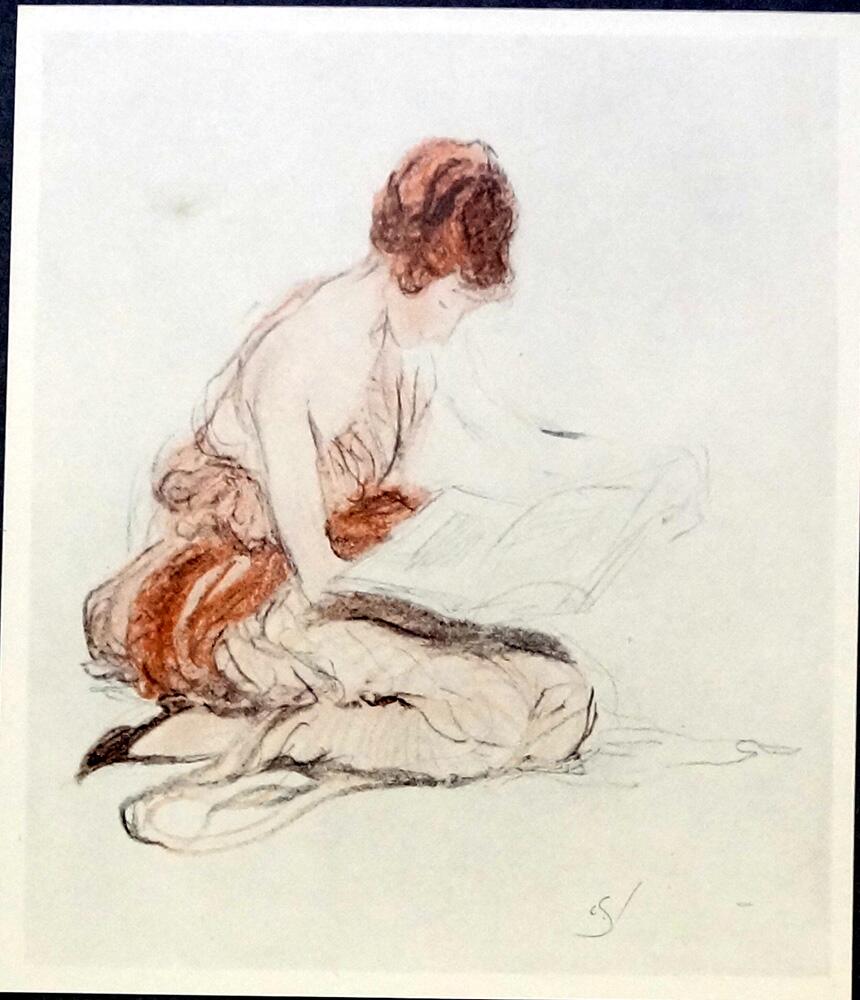
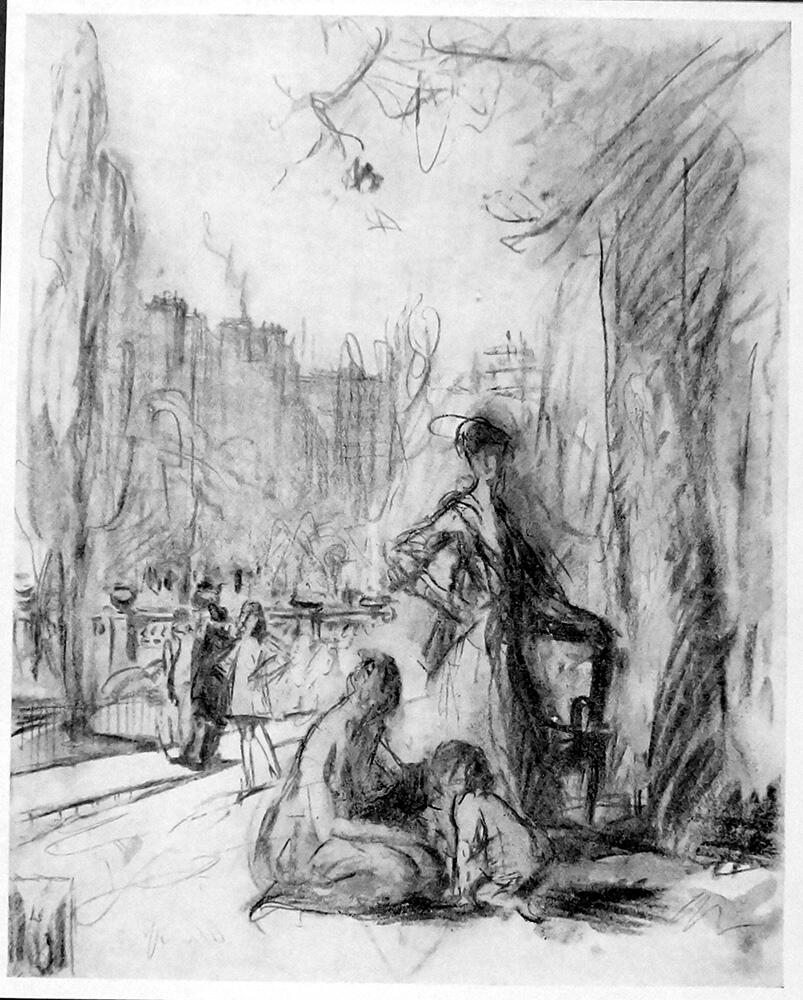
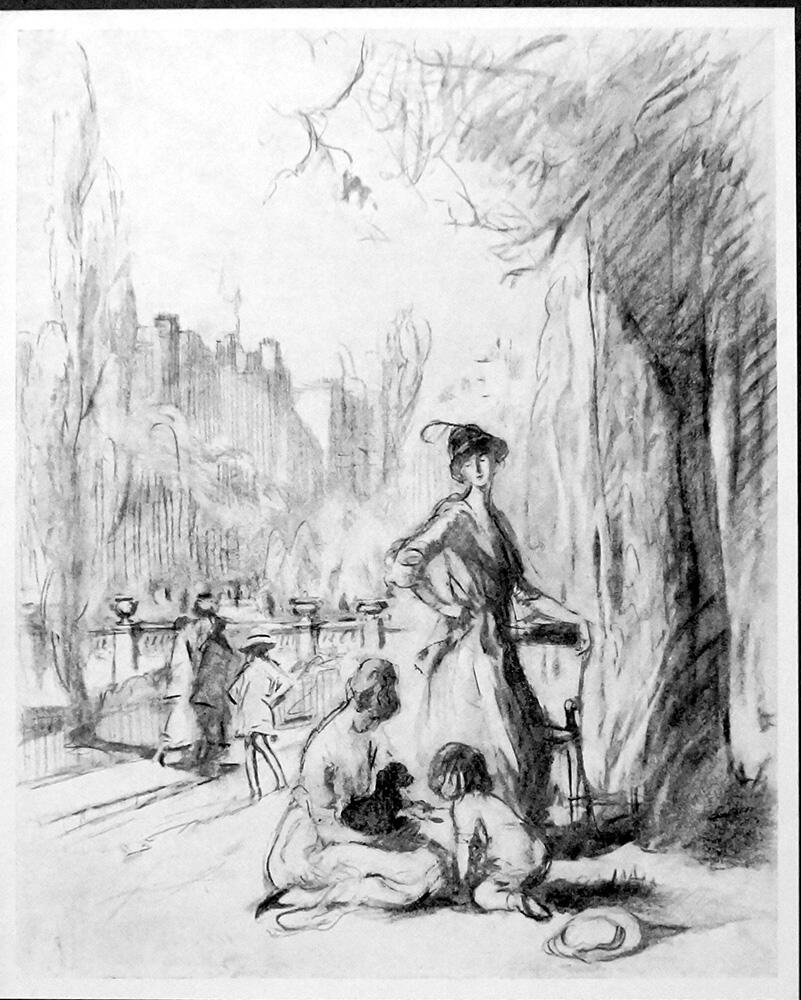
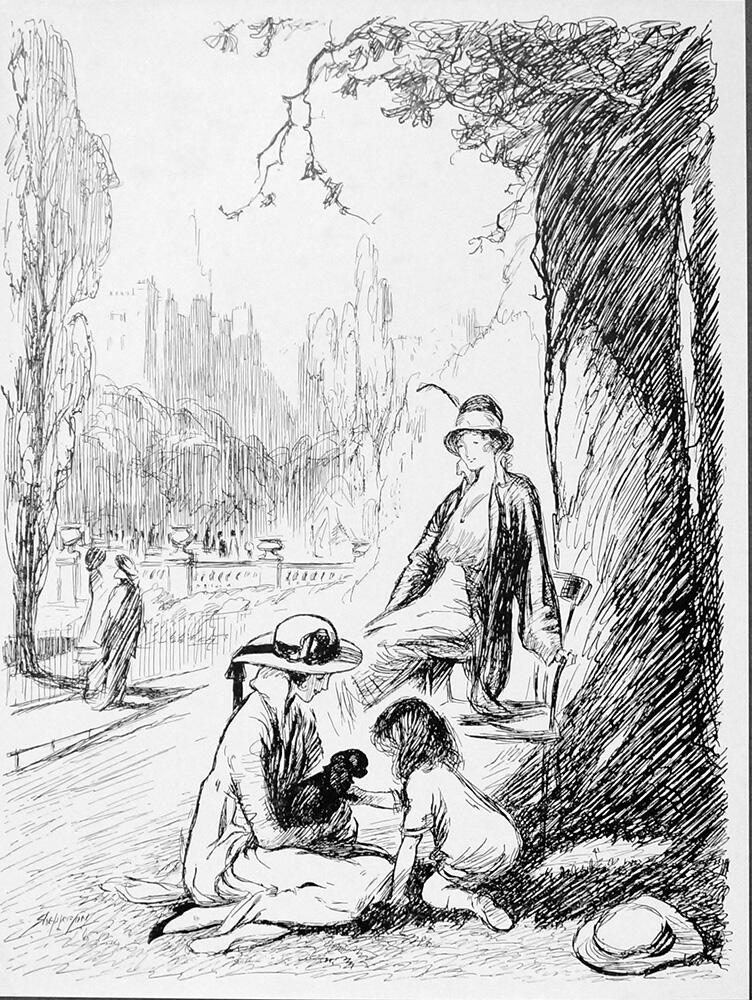
Each artist was given an entirely free hand as to subject, the only stipulation being that the painting or drawing should be representative of his/her technique and that each stage in its composition should be shown. Bradshaw then reproduced in 6 plates each step in the artistic process and published the 6 lithographs in a portfolio with a 12 page introduction and description of the process within a card folder.
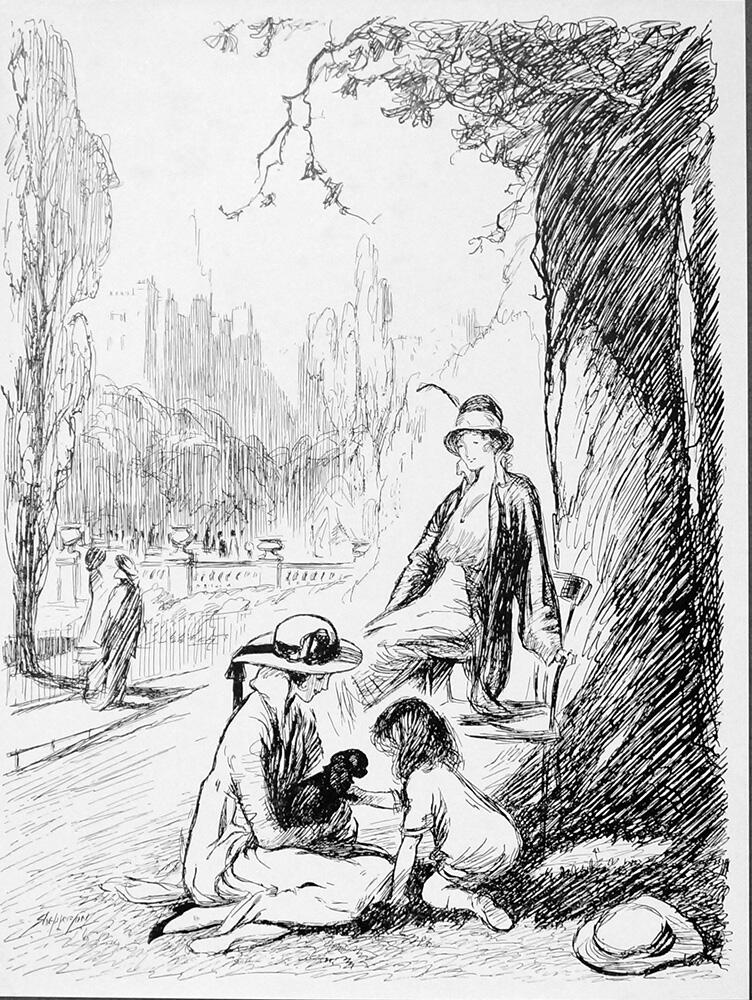
'In Kensington Gardens' is the pen and ink drawing demonstrated by Claude Shepperson, water colourist and Punch artist.
Artists in this series are Lawson Wood, F.H. Townsend, Fortunino Matania, Harry Rountree, Claude A Shepperson, Bert Thomas, William Heath Robinson, Frank Reynolds, Cyrus Cuneo, William Russell Flint, Charles Brock, Spenser Pryse, Warwick Reynolds, Edmund Sullivan, Balliol Salmon, H.M. Bateman, Louise Wright, W Hatherell, Dudley Hardy and Bernard Partridge.
Highly sought after, these portfolios were a ground breaking idea and very popular at the time. A fascinating way to discover the secrets and techniques of some of the worlds' greatest illustrators.
You might be interested in these related item(s):
Original issues of Bradshaw's ART OF THE ILLUSTRATOR (1918)
- Artist Biography
Claude Allin Shepperson (25 October 1867 - 30 December 1921; Beckenham, Kent, UK)
Claude Shepperson was born in Beckenham, Kent, UK in 1867, to Allin Thomas Shepperson of Winsland Bargerton, South Devon, and Florence Mary, the eldest daughter of William Hinkes Cox, Justice of the Peace. Educated privately, he spent the years 1880-82 at Weymouth College. Though first studying law, he turned to art, and spent two years in Paris.
On his return to London, he took classes at Heatherley's (1891), and received help from Sir Frank Short. He soon began to exhibit landscapes and social scenes in a variety of media at leading societies in London and the provinces. Later, he concentrated on etching and lithography and, through his work as a printmaker, he made the acquaintance of the artists, George Soper and his daughter, Eileen.
As a man and an artist, Claude Shepperson was praised for his charm and refinement, and he remains best known for the elongated elegance of his female type, the 'Shepperson Girl'. Nevertheless, his artistic accomplishments were wide-ranging, and included painting, printmaking and illustration.
In the 1890s, Shepperson illustrated books and periodicals in an elegant manner often reminiscent of the American, Edwin Austin Abbey. However, his contributions to Gresham's Imperial Edition of Dickens, and especially his illustrations to A Christmas Carol and The Haunted Man, in the early twentieth century, show his ability to create darker atmospherics.
Most of his humorous work appeared in Punch, between 1905-20, with an increasing emphasis on fashionable society. His fellow literary contributor to Punch, E V Lucas, considered him to be the finest illustrator of his day. A member of the London Sketch Club, he acted as a tutor for Percy Bradshaw's Press Art School and was one of the 20 select contributors to Bradshaw's seminal "The Art of The Illustrator" published in 1918. Percy Bradshaw, commenting on a Punch reader's remark that Shepperson was a "Sketcher of Aristocrats", said that Shepperson would rather be called "an aristocrat who sketches".
Sheppersons was not only a painter, a book and magazine illustrator, a cartoonist for Punch, but also a commercial artist, producing images for advertisements.
Shepperson was elected a member of the Royal Society of Miniature Painters, Sculptors and Gravers (RMS) in 1900, and also of the Royal Institute of Painters in Water Colours (RI) in that year. Five years later, in 1905, Shepperson resigned his membership of the RI. In 1910 he was elected an Associate of the Royal Watercolour Society. In 1919 he was elected both an Associate of the Royal Academy, and of the Royal Society of Painter-Etchers and Engravers (ARE)
Living for many years at 18 Kensington Court Place, Shepperson died at his studio in Mulberry Walk, Chelsea, on 30 December 1921, just a few years after a tour of duty as a war artist (nearing the age of 50) in World War I.
He was the subject of a memorial show at the Leicester Galleries in the following year and his work is represented in the collections of the British Museum, Tate and the V&A.
Shepperson's style of drawing was much admired. Ellwood stated that Shepperson was "an inspired draughtsman who can give us the smartest English girl or the rustiest farm hand with equal penetration in a style which is always distinguished." He also said that his work shows the perfect combination of naturalistic drawings and decorative qualities, and that Shepperson "was the greatest master of placing or composition in English pen drawing", and that "his drawings should be analysed and pondered over by students." He noted that Shepperson had begun as a "costume" illustrator, but that he had later "turned to the society note, for which his temperament was admirably fitted", and that his drawings in Punch were "classic examples of the ultimate in patrician atmosphere."
Peppin and Micklethwait say that Shepperson "specialised in Society Scenes based on sketches from life in Kensington Gardens and elsewhere in the West End" and this his sketches were "drawn with great elegance in a hazy and slightly elongated manner and often featuring the ‘Shepperson Girl' who embodied every contemporary notion of aristocratic refinement."
Houfe called him "a graceful artist whose work is at its best when children and pretty young women are involved". Sketchley stated of him that "The energy of his line, the dramatic quality of his imagination, render him in his element as an illustrator of events" and the vigour that projects itself into moments of action also inform his representation of moments when there is no action.
Source: Chris Beetles; Wikipedia
Send this to a friend
Claude Shepperson and His Work: The Art of the Illustrator (Limited Edition Prints)
Similar Items...
Lawson Wood and His Work: The Art of the Illustrator (Limited Edition Prints)
Artist: Lawson WoodMedium: Limited edition Lithograph prints on CardSize: 11" x 16" (279mm x 406mm)Date: 1918Code: WoodL6This is a Limited edition col...
£55.00View details

Spencer Pryse and His Work: The Art of the Illustrator (Limited Edition Prints)
Artist: Spencer PryseMedium: Limited edition Lithograph prints on CardSize: 11" x 16" (279mm x 406mm)Date: 1918Code: Pryse6This is a Limited edition c...
£40.00View details

William Russell Flint and His Work: The Art of the Illustrator (Limited Edition Prints)
Artist: William Russell FlintMedium: Limited edition Lithograph prints on CardSize: 11" x 16" (279mm x 406mm)Date: 1918Code: FlintWR6This is a Limited...
£75.00View details
